Experiment 01 · Machine Learning in Bio-Mechatronics & Bioinformatics
Build Your Own Biological Dataset
Don’t just train a model on someone else’s dataset. Collect your own biological data, build your own dataset, and train your own model.
Put your fingertip on a MAX30100 light sensor. Record yourself resting, moving and recovering. Teach a model to tell the three apart, then put the model on OrbitCore so the board predicts by itself and blinks the answer.
About 40 minutes with a board. Works in Chrome or Edge on a laptop. Your recording stays in this browser tab.
The whole journey
From a fingertip to a blinking prediction, in ten steps
Select a step to jump to it. Steps open one at a time as you finish the one before.
Two lights shine in
The MAX30100 shines infrared and red light into your fingertip, 50 times a second.
Every beat dims the light
Each heartbeat pushes a little more blood into the finger, and blood absorbs light. The light coming back dips with every beat.
The board learns to answer
From those dips you build a dataset, train a model, and copy the model onto OrbitCore. It then blinks 1, 2 or 3 times for Baseline, Activity or Recovery.
The question you will answer
“Does giving the model more information improve classification?”
You will train models that see only the heart rate, all the infrared features, or infrared and red light together. Then you compare their scores on your own data. The answer is not decided in advance; it depends on what you record.
What you need
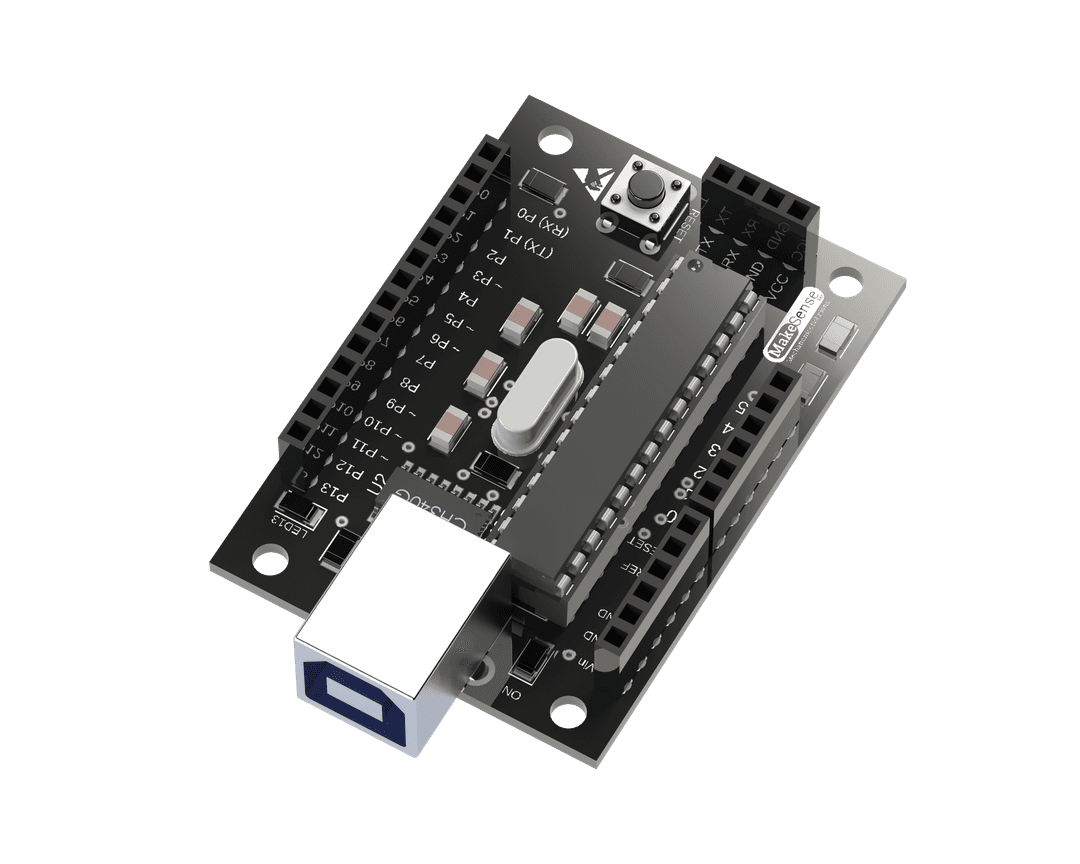
- An OrbitCore board and its USB cable
- A MAX30100 pulse sensor module and four jumper wires
- Chrome or Edge on a laptop or desktop (they can talk to USB devices)
- A chair, and a little space to walk in place
No board today? Use the simulated signals to follow every step.
Taking part comfortably and safely
- Taking part is voluntary. You can stop at any moment, and you can record a classmate instead of yourself if they agree.
- The activity is light: walking in place for about a minute. Skip it or shorten it if you do not feel well.
- The sensor runs on the board’s 5 V USB supply. Wire them only as shown on this page, and unplug the USB cable before changing any wiring.
- Your signals are personal data. They stay in this browser tab unless you download or share the file yourself.
1Physical Vibe Coding
Tell OrbitCore what to measure
A sensor only makes a tiny voltage. The board needs a small program to read it. Say what you want in your own words, and the code is written for you.
Physical Vibe Coding
Ask for the sensor, then change it step by step: which lights to send, how bright.
Nothing yet. Type a request below or pick one of the examples.
In simple words
The MAX30100 measures light as a number from 0 to 65 535. So your pulse arrives as “46 012, 45 980, …”, not as a heartbeat yet. The next steps turn those numbers into meaning.Your sketch
Your code appears here after your first request.
Put the program on the board (“flashing”)
Two ways to do it. Pick the one that suits you; both end with OrbitCore sending numbers over USB.
The fastest route for a workshop. This installs MakeSense’s ready-made MAX30100 firmware straight from the browser, with nothing to install. It sends infrared and red light 50 times per second, flashes the board’s LED on every heartbeat, and later (step 8) carries your trained model.
What does the code actually do?
I2C. The MAX30100 talks to OrbitCore over two wires, SDA (data) and SCL (clock). The board writes settings into the sensor’s registers (which lights, how bright, how fast) and reads the measurements back.
The sensor keeps time. It measures exactly 50 times per second on its own clock and stores up to 16 readings in a small memory (a FIFO). The sketch empties that memory in every loop. Evenly spaced readings matter: later steps measure the time between heartbeats.
Two lights. Each reading has an infrared and a red value. Blood absorbs the two colours differently, so the two signals carry slightly different information.
One line per reading. Each line holds the time and the light values, separated by commas. That simple format (CSV) is exactly what a dataset is: rows of measurements.
Next: step 2: Collect
Board flashed and wired? No board today? Either way, continue: the next step also offers simulated signals.